
Ashland County Deed Records and Instruments
The Ashland County Register of Deeds records every instrument that affects real estate. The main families are easy to sort. A deed records a transfer. A mortgage or lien records a claim against the land. A release or satisfaction records that an earlier claim was resolved. Assignments, easements, and plats round out the mix. The LandShark portal organizes these into document types. The county does not publish the full dropdown list, but these groups cover what a deed search in Ashland County will normally turn up.
| Deed Type | What It Does | Common Use |
|---|---|---|
| Deed | Records a conveyance between named parties. | Confirm a transfer and legal description. |
| Mortgage or assignment | Records a security interest or its transfer. | Follow the lender's recorded interest. |
| Release or satisfaction | Records release of a prior instrument. | Check whether a recorded claim was addressed. |
| Lien or judgment | Records a claim affecting property or a party. | Connect instrument searches with court files. |
| Easement or plat | Shows a land-use right or mapped division. | Read with the tract's legal description. |
Recorded sets in Ashland County include deeds, mortgages, assignments, releases and satisfactions, liens, easements, and plats. A deed is evidence of a conveyance. A mortgage or easement is different. It records an interest that can stay alive long after a transfer. Search by party name and by tract rather than treating every record as proof of who owned the parcel. That distinction keeps an Ashland County property search honest.
LandShark's Ashland County Wall Dates
Timing matters with LandShark, Ashland County's deed search portal. The Register of Deeds posts party and tract index entries quickly. Entries appear by the next working day after recording. Instrument images generally follow by noon that same day. Equipment trouble or heavy volume can push those dates back. A deed signed today may simply not show up yet. An empty result is not proof that nothing was recorded. The LandShark disclaimer adds that indexes can hold errors and omissions. It recommends searching several ways. The online start year is not stated. Any date gap belongs with the Register of Deeds or an archive rather than a guess. Use the Ashland County LandShark portal to open the public deed index.
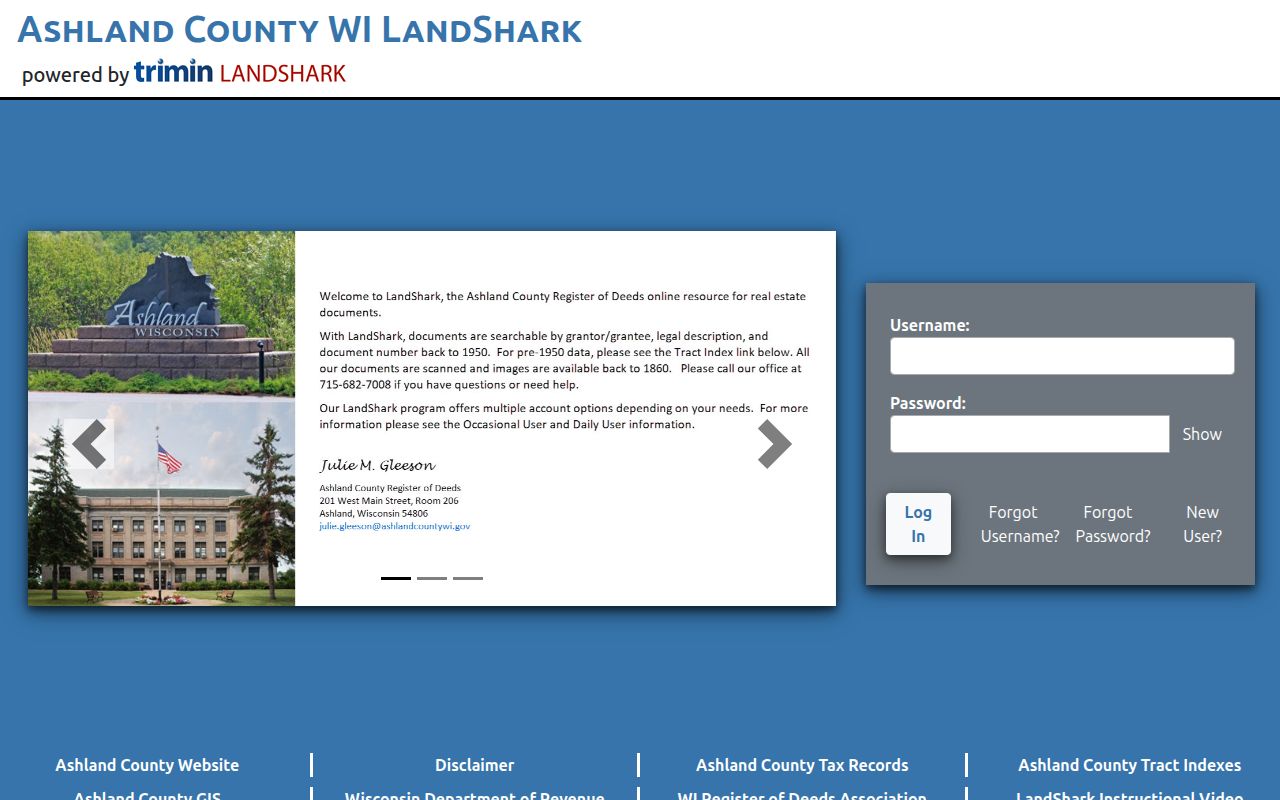
The LandShark landing screen identifies the deed search portal for Ashland County. The timing and legibility rules come from the disclaimer rather than the landing page itself.
Following Ashland County Party and Tract Indexes
LandShark runs on two Ashland County indexes. The party index, often called the grantor-grantee index, follows a person's or entity's name. The tract index follows the legal description of the land itself. Each route can catch what the other misses. That matters when a surname changes, when a trust or an estate holds title, or when two unrelated people share a name. Run both for a thorough Ashland County deed search.
- Start from the parcel's current roll owner or legal description.
- Search the owner as grantee to find the instrument that conveyed the parcel to them.
- Read the grantor and legal description on that instrument, then search the grantor as a prior grantee.
- Compare the next deed's description and recording reference before adding the prior owner to the chain.
- When the online years end or an image is unclear, ask the Register of Deeds or archival staff where the older volume sits.
- Grantor
- The party named as transferring an interest.
- Grantee
- The party named as receiving an interest.
- Chain of title
- The linked sequence of recorded transfers for a tract.
- Tract index
- A route organized around the legal description instead of only a party name.
Ashland County's Online Start Year Is Unknown
The county's public disclaimer leaves real gaps. It names no earliest LandShark index year and no imaging cutover date. It also skips the document-type dropdown, result limits, export controls, image price, and certified-copy price. Those omissions matter once a deed search in Ashland County reaches an older owner of record or needs a legible official copy. Treat the online index as a starting point with a known next-day wall, not a complete year-by-year archive. For a chain that predates the portal, call the Register of Deeds at 715-682-7008 and ask which deed books, microfilm, or archival holdings cover your date and tract. The Northern Great Lakes Area Research Center and the Wisconsin Historical Society are local archival routes. No courthouse fire destroyed Ashland County deed books.
Older Ashland County Images Need Checking
Older scans deserve extra care. The county's recording system notes that documents recorded before 1997 may be illegible. Legibility was not required before then. Blue or light-colored ink often reproduces poorly. When a name, date, parcel description, or reference number is hard to read, compare the index against another instrument. Ask the office about a counter or certified image. Never treat a fuzzy online scan as certain.
Note what can be read: the parties, instrument type, recording date, and legal description. Then check whether an assignment, release, satisfaction, or later conveyance clarifies the sequence. The county publishes no image or copy fees. Call before relying on a price quoted elsewhere.
Other Ashland County Land Instruments
Instrument type matters when you read a chain of title. A deed records a conveyance. A mortgage creates a recorded security interest. A later satisfaction or release points back to that obligation. Easements and restrictions can limit how land is used without changing the named owner, and a plat lays out lots rather than proving who holds each one today. Follow the document references and legal description across the whole sequence of Ashland County property records. A mortgage entry or release alone never establishes clear title, and the index is no substitute for reading the instruments themselves plus any related court record.
A title trail includes more than deeds. LandShark is expected to carry mortgages, assignments, liens, releases, easements, plats, and other instruments affecting real estate in Ashland County. Search the current owner or lender as a party, or lean on the tract index when the legal description is the more stable key. A judgment or foreclosure case may also sit in a separate docket at the Clerk of Circuit Court.
The Register of Deeds is the keeper for recorded instruments. WCCA serves as the statewide circuit-case gateway. The Ashland County former-owner chain page walks prior transfers backward, while this section stays with instrument families and their roles in the deed records.
For an Ashland County foreclosure, quiet-title, or lien dispute, the Wisconsin Circuit Court Access portal provides statewide case summaries. The Clerk of Circuit Court keeps the local file and pleadings.
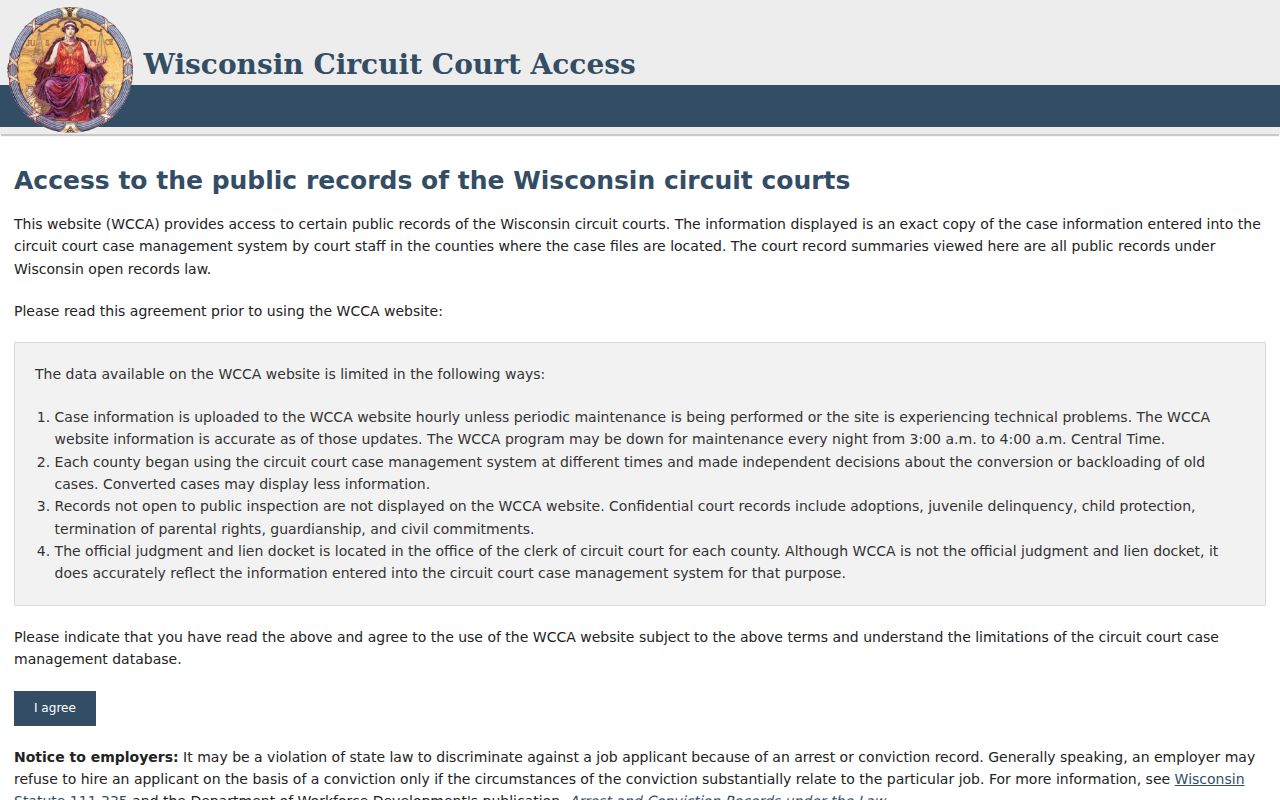
A docket can locate a property case. The recorded deed index at the Register of Deeds remains the source for instruments filed against the land. Federal property claims may use the PACER federal court records service. An account is required, and PACER should be checked directly for current fees.
Federal dockets are a separate court source. They do not replace the Ashland County Register of Deeds index or prove title on their own.
Older Ashland County Land References
Ashland County land research offers several local paths. Still, the earliest deed-book run remains unconfirmed. WSGS lists county map years 1878, 1917, 2000, and 2004. It also points to a circa-1850 map of Prentice's Addition, an 1884 Sanborn map, and the circa-1888 Polk map of Ashland. Two regional archives can anchor older parcel questions. The Wisconsin Historical Society and the Northern Great Lakes Area Research Center hold finding aids, maps, property-history materials, and archival collections.
One archival loss should not be confused with a county land-record loss. The Ashland Historical Society's museum collection was displaced by the 1967 Angvick's Furniture Store fire. No official account places deed books in that fire. Old city addresses often fail to match a modern parcel. Pair directory or map context with the exact plat and legal description when that happens.
Ashland County Estate Transfers Need Two Records
A death does not itself change a land record. An Ashland County transfer may use a recorded deed. It may also use a probate order, executor or administrator deed, transfer-on-death instrument, survivorship, or trust conveyance. The Register in Probate or Clerk of Circuit Court may hold the estate file and orders. The Register of Deeds holds the resulting recorded instrument. A court case summary can help identify a file. The local clerk keeps pleadings and orders.
Search the recorded party name as indexed. Include a trustee, personal representative, or estate name when applicable. Then compare the deed's legal description with the parcel. A death certificate proves death, not a transfer of title. Vital certificates have restricted access. A public index is not the same as a certified record in the Ashland County property records.
Getting an Ashland County Deed Copy
LandShark provides an online index and images for Ashland County deed records. The public pages state no copy, certification, or image fees and do not spell out every download and payment step. For an official copy, contact the Register of Deeds. Bring party names, an approximate date, a document reference if known, and the legal description. Ask what copy format is available and how payment is handled before traveling or mailing a request.
The Register of Deeds sits at 201 W Main Street, Room 206, Ashland, Wisconsin 54806. The county lists 715-682-7008 and julie.gleeson@ashlandcountywi.gov. A copy is one instrument. A title search requires reviewing related transfers and interests as well.
Recorded, not guaranteed. A LandShark result shows a recorded instrument, not a title opinion. Unrecorded interests or an incomplete chain may exist; use a title professional for a title determination.